China is a country where thousands of years of history sit beside glass towers and fast trains. In one day, a visitor can walk along a stone wall built centuries ago, then ride a metro line that carries millions of people across a city of skyscrapers. This contrast is what makes a trip to China so memorable, and it also makes planning important.
Top Sights
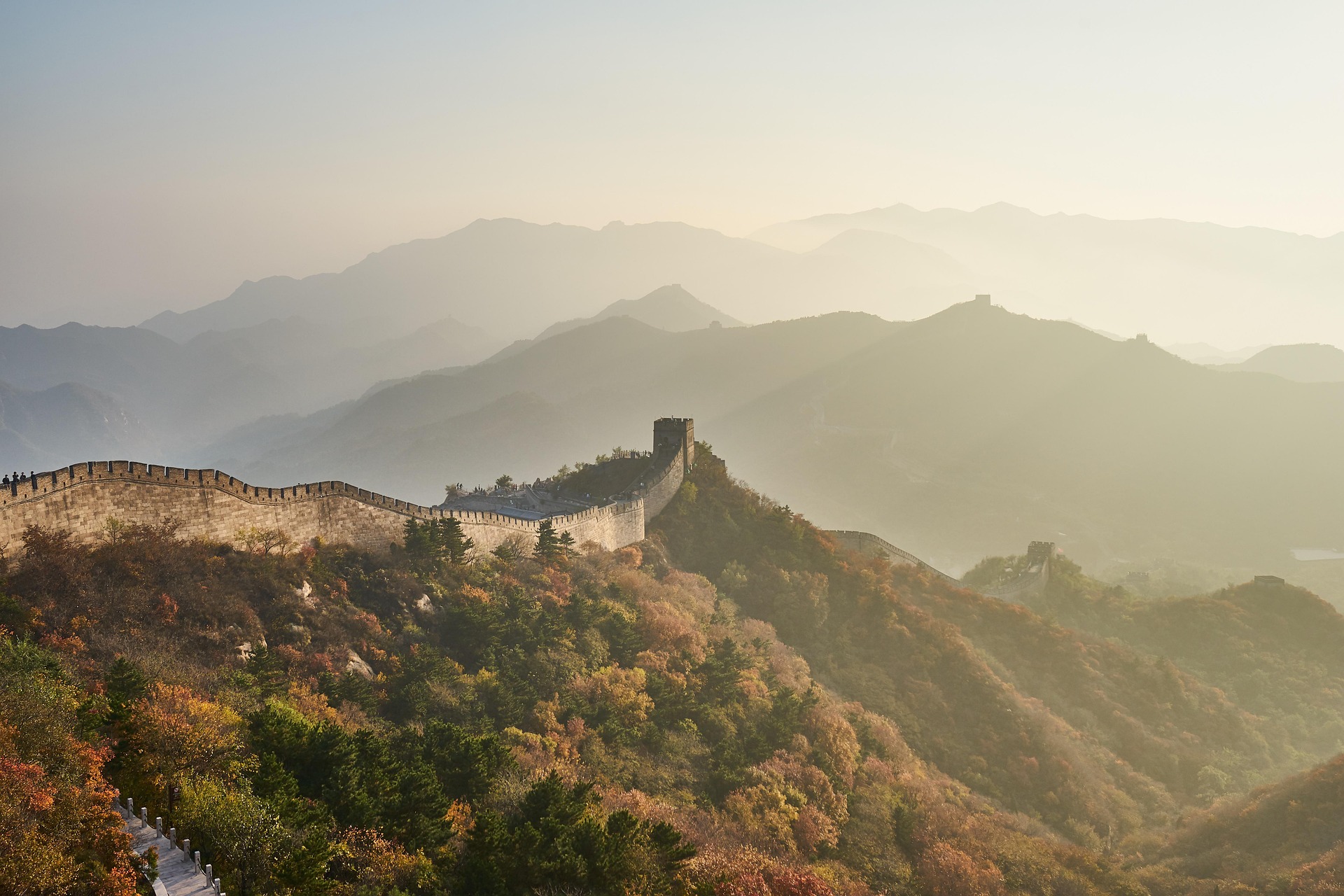
The Great Wall is the first place most visitors think of. It stretches across northern China over thousands of kilometers, and the sections near Beijing are the most visited. Badaling is the closest and busiest section, while Mutianyu is quieter and offers a cable car and a long walk along restored towers. Both give wide views of green hills, especially in the early morning before the crowds arrive.
In Beijing, the Forbidden City is the vast palace complex where emperors lived and governed for nearly five centuries. Its red walls, golden roof tiles, and wide stone courtyards are like the pages of a history book laid open on the ground. Nearby, the Temple of Heaven is where emperors once prayed for good harvests. Its blue-roofed hall is one of the most photographed buildings in the city.
Further south, the Terracotta Army in Xi’an is a field of life-size clay soldiers, horses, and chariots buried with the first emperor of a unified China more than two thousand years ago. Each figure has a different face, and the scale of the pits is hard to take in from the walkways above them. Xi’an is also the eastern starting point of the ancient Silk Road, the trade routes linking China with Central Asia and beyond.
In the south, Guilin and Yangshuo are known for their karst landscape, where limestone peaks rise from flat farmland like giant green sugarloaves. A boat trip on the Li River passes these peaks slowly, and the water reflects them so clearly that the river seems to hold a second mountain range beneath its surface. Visitors who enjoy quiet scenery often find this region the most restful part of their trip.
Markets and Shopping
Markets in China are lively places where bargaining, conversation, and the smell of grilled food fill the air. Panjiayuan Antiques Market in Beijing is one of the largest markets for old objects, including jade, porcelain, calligraphy, and carved furniture. It is busiest on weekends, and it is worth taking time to look closely, since many items are reproductions and quality varies widely.
Wangfujing Snack Street, also in Beijing, is a narrow lane of food stalls and shops. Its bright signs and steaming pots create a scene that feels like a festival that never ends. In Shanghai, the Yuyuan Bazaar in the old town offers traditional crafts, tea shops, and souvenirs, set around a classical garden with curved rooftops and ponds.
In Shanghai, Tianzifang is a maze of lanes filled with small studios, cafes, and boutiques that have grown out of an old residential area. It is a good place to see how modern design and old architecture share the same streets. Shoppers should keep in mind that many small vendors accept only cash or mobile payments, so it is useful to know how payment works before setting out.
Food
Chinese food differs greatly from one region to another, and a single trip can reveal a surprising range of tastes. In Beijing, Peking duck is roasted until its skin is thin and crisp, then served with pancakes, spring onion, and sweet bean sauce. Dumplings, known as jiaozi, are a common meal at home and in restaurants across the north.
Sichuan cuisine is famous for its bold heat and the tingling numbness of Sichuan peppercorns. Hot pot is a popular way to share a meal, with a simmering pot of broth placed in the center of the table and raw ingredients cooked at each diner’s side. Chongqing and Chengdu are the best known cities for this style of cooking.
Xi’an has a strong Hui Muslim community, and its Muslim Quarter is a long street of food stalls selling lamb skewers, flatbreads, and hand-pulled noodles. Many restaurants in this area are halal, and the atmosphere of the lanes near the Great Mosque is like a window into a different side of Chinese life. Lanzhou beef noodles, served in a clear broth with thin noodles, are another popular dish in the northwest.
For those who prefer familiar flavors, large cities have international restaurants and hotel dining rooms. Vegetarian food is also widely available in Buddhist temple areas, where many restaurants serve dishes made with tofu and mushrooms.
Practical Tips
The best time to visit most of China is spring, from April to early June, and autumn, from September to November. Summers can be very hot and humid in cities such as Shanghai and Guangzhou, while winters in Beijing are cold and dry.
- Visa rules change from time to time, and some nationalities may be eligible for short visa-free stays. Check the current rules with the Chinese embassy or consulate before travel.
- Major public holidays, including the Spring Festival and the National Day Golden Week in early October, bring very large crowds to popular sights and transport hubs.
- Mandarin is the main language. Major cities, airports, and metro stations usually show signs in English, but many smaller restaurants and shops do not.
- Translation apps are useful. Download offline maps and a translation tool before arriving, since some foreign apps and websites are not available inside China without a separate connection.
- Mobile payment apps are widely used for taxis, restaurants, and markets. Foreign bank cards may not work everywhere, so carrying some cash is sensible.
- Ride-hailing apps and taxis are common in cities. Having your hotel address written in Chinese characters helps drivers and station staff.
- High-speed trains connect many major cities quickly and comfortably. Tickets for popular routes can sell out, so it is advisable to book in advance through official channels.
- Muslim visitors can find halal restaurants in Beijing, Xi’an, Lanzhou, and Urumqi, and mosques open to visitors in several cities. Opening times vary, so it is best to confirm them before a visit.
- Respectful dress is appreciated when visiting temples and religious sites, and photography rules may apply inside some halls and museums.
Good planning makes a trip to China much smoother. Booking popular sights ahead, keeping copies of important documents, and allowing extra time for crowds all help a visit run more calmly.
Closing Thoughts
China rewards the traveler who moves between its ancient gates and its bright new districts with patience and curiosity. Each city has its own rhythm, from the slow courtyards of Beijing to the spicy streets of Chengdu. Like a long scroll unrolled one section at a time, the country reveals more with every journey.