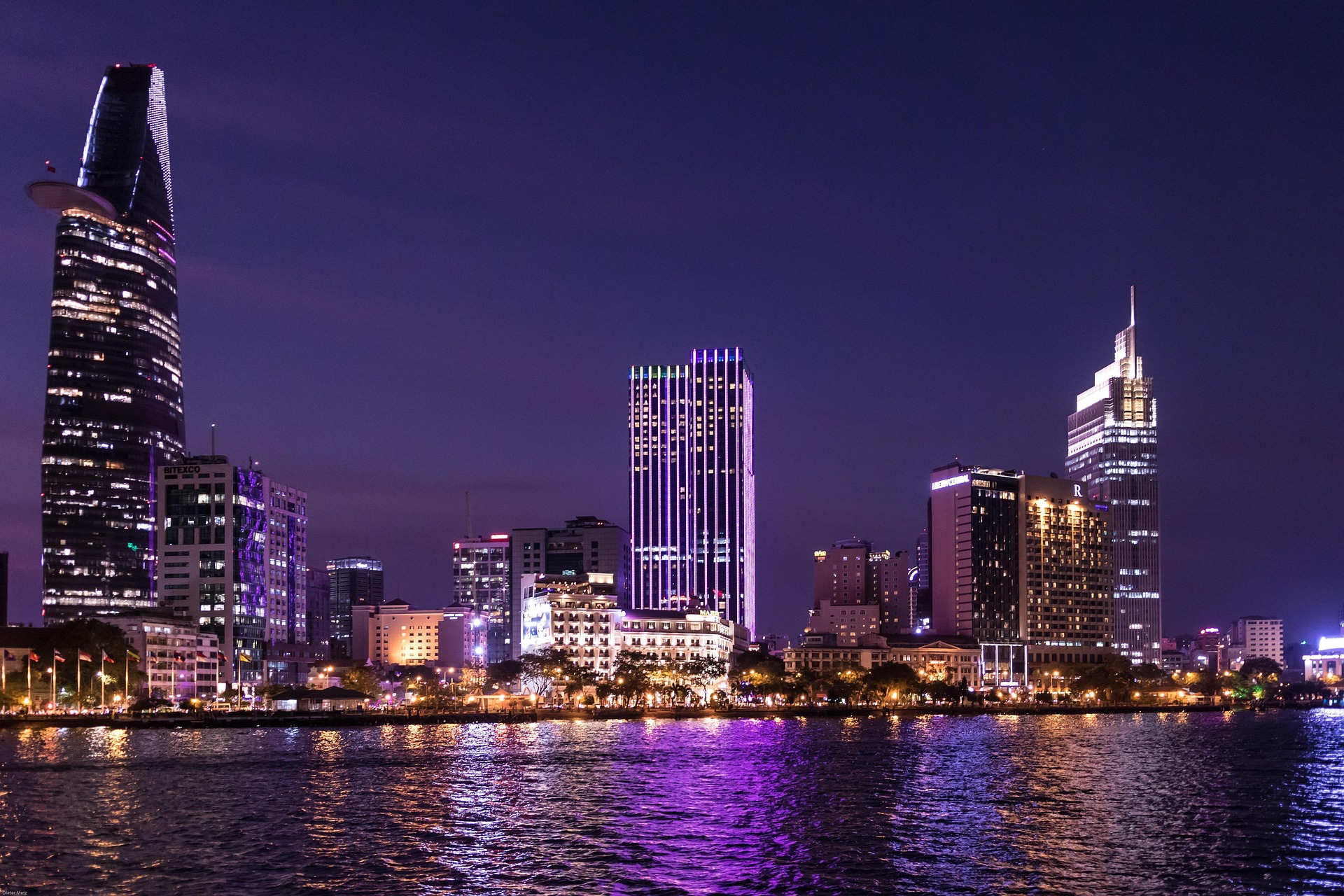
Ho Chi Minh City wakes early, and by dawn the streets already hum with motorbikes, coffee stalls and the clatter of shop shutters. Many residents still call it Saigon, its former name, and the two names sit side by side in everyday speech. The city is not only a place of busy avenues but also one of quiet pagodas, shaded parks and long, unhurried meals.
Top Sights in the City Centre
Most first visits begin in District 1, the central district where many landmarks stand within walking distance of one another. The area has wide boulevards from the French colonial period, glass towers and narrow lanes, all within a few streets of each other.
The Independence Palace, also called the Reunification Palace, is a good place to start. This is where the war ended in 1975, and its meeting rooms, command rooms and underground corridors are preserved much as they were. The War Remnants Museum is close by and deals with the Vietnam War through photographs, documents and military equipment. Some of its displays are sobering, so visitors travelling with children may wish to choose the rooms carefully. The two sites are separate attractions with separate tickets, and each keeps its own set hours.
The Saigon Notre-Dame Cathedral, built of red brick, stands in the same district and is a recognisable landmark of the colonial era. Right beside it is the Central Post Office, whose high arched hall, tiled floor and old wall maps make it more than a place to send postcards. A short walk away, Nguyen Hue Walking Street runs toward the Saigon River and fills with families and strollers in the evening, when the buildings are lit.
For a quieter hour, the Jade Emperor Pagoda offers incense smoke, carved wooden figures and dim, fragrant halls. Modest clothing that covers the shoulders and knees is appropriate at pagodas and other religious sites.
Markets and Shopping
The city’s trading life is easiest to understand in its bazaars. Ben Thanh Market, in District 1, is the best known, a large hall of stalls selling spices, dried fruit, coffee, textiles, souvenirs and ready-made snacks. The main hall keeps daytime hours, and in the evening vendors set up along Phan Chu Trinh and Phan Boi Chau streets nearby. Prices at many stalls are open to friendly bargaining, and a calm, smiling approach usually works better than a firm one.
Binh Tay Market lies in Cho Lon, the historic Chinatown district to the west of the centre. Its curved tiled roofs and central courtyard give it a style quite different from the hall at Ben Thanh. The stalls here are used mainly by local traders and shoppers, which makes it a useful place to see how wholesale goods, dried foods and household items move through the city. The streets around it also hold old temples and herbal shops.
Carrying some small cash is sensible in all of these places, since many stallholders prefer it to cards.
Local Food to Try
Food in Ho Chi Minh City is not a separate activity from daily life; it is the activity around which the day is arranged. Pho, a fragrant noodle soup in a clear broth, is eaten at breakfast but is welcome at any hour. Banh mi, a crisp baguette filled with herbs, pickled vegetables and a choice of fillings, shows the French influence on Vietnamese cooking. Com tam, or broken rice, is a plate of fine rice grains usually served with grilled meat and a fried egg.
Lighter dishes suit the climate well. Fresh spring rolls wrapped in rice paper come with peanut sauce, and noodle salads arrive with mint, basil and lime. Vietnamese coffee, brewed slowly through a small metal filter and often sweetened with condensed milk, is served hot or over ice. A glass of sugarcane juice or fresh coconut water makes a good partner for the afternoon heat.
Halal Dining and Mosques
Muslim travellers will find the city easier than expected. Nguyen An Ninh Street in District 1, between Ben Thanh Market and the Central Mosque, is a cluster of halal restaurants and is nicknamed Halal Street. Menus there include local, Malaysian, Indian and vegetarian dishes. Al Rahim Mosque is on Nam Ky Khoi Nghia Street, near Ben Thanh Market and City Hall, which makes prayer stops simple during a day of sightseeing.
Because pork is common in many Vietnamese dishes and broths, it is worth confirming ingredients when eating outside the halal restaurants. Certification and opening times differ from one place to another, so a quick check on the day is wise.
Getting Around the City
Traffic in the city is dense, and motorbikes move like a steady current around cars and pedestrians. Crossing the road is done by walking at an even pace without stopping, so that riders can steer around you. The central sights are close enough to explore on foot, with breaks in cafés or parks.
For longer distances, ride-hailing apps are widely used for both cars and motorbike taxis. One local fleet runs all-electric cars that can be booked through its app or hailed in the street as metered taxis. Agreeing on the fare method before setting off, or using the app’s fixed estimate, keeps the ride simple.
The city has also opened a metro line that runs from Ben Thanh in the centre to Suoi Tien Bus Station in the east. It has 14 stations and is a convenient option for reaching the eastern districts and Suoi Tien Theme Park, where passengers leave the train at Dai Hoc Quoc Gia. The line keeps set daily hours, which differ between weekdays and weekends.
Weather and Best Time to Visit
The climate is tropical, with a dry season from November to April and a rainy season from May to October. The dry months are generally more comfortable for walking, although March and April can be very hot, with temperatures above 35°C. In the rainy season, showers tend to arrive as short, heavy bursts, and September is the wettest month. A light rain jacket, a hat, sunscreen and a refillable water bottle are useful in any month.
Planning outdoor sights for the early morning and indoor visits, such as museums and covered bazaars, for the hottest part of the afternoon keeps the day comfortable. Light, breathable clothing is the practical choice year round.
A Day Trip Beyond the City
Ba Den Mountain, in Tay Ninh province, lies about 100 km from the city and is a day trip rather than a city sight. Cable cars carry visitors up the slopes to temples and wide views over the flat countryside. The cars keep their own schedule, which differs between weekdays and weekends, and operating hours can change with the weather. Those who buy tickets online are notified of such changes.
Planning Tips
- It is best to group sights by area, for example the Independence Palace, the War Remnants Museum, the cathedral and the post office in one day.
- Museums and palaces stop admitting visitors before their closing time, so earlier arrival is safer.
- Binh Tay Market and Cho Lon are best visited in the morning, when trading is at its liveliest.
- Carrying a small amount of cash, a phone with a map app and a copy of the hotel address is useful for taxis.
- Drinking bottled or filtered water is the common practice for visitors.
By evening the heat softens, the lanterns come on, and the city settles into the sound of cups, bowls and conversation, a place that is best remembered one meal at a time.
Sources
- Notre-Dame Cathedral Ho Chi Minh City: 2026 Visitor Guide
- Things to Do in Ho Chi Minh City: 16 Ideas With 2026 Prices
- War Remnants Museum Tickets and Visiting Hours
- Ho Chi Minh Metro Line 1 Map 2026: Fares and Hours
- Ho Chi Minh City Metro: Line 1 with 14 stations
- Tan Son Nhat Airport to District 1: Every Option 2026
Entry requirements, opening hours, and seasonal conditions can change. Please confirm the details with official sources before you travel.